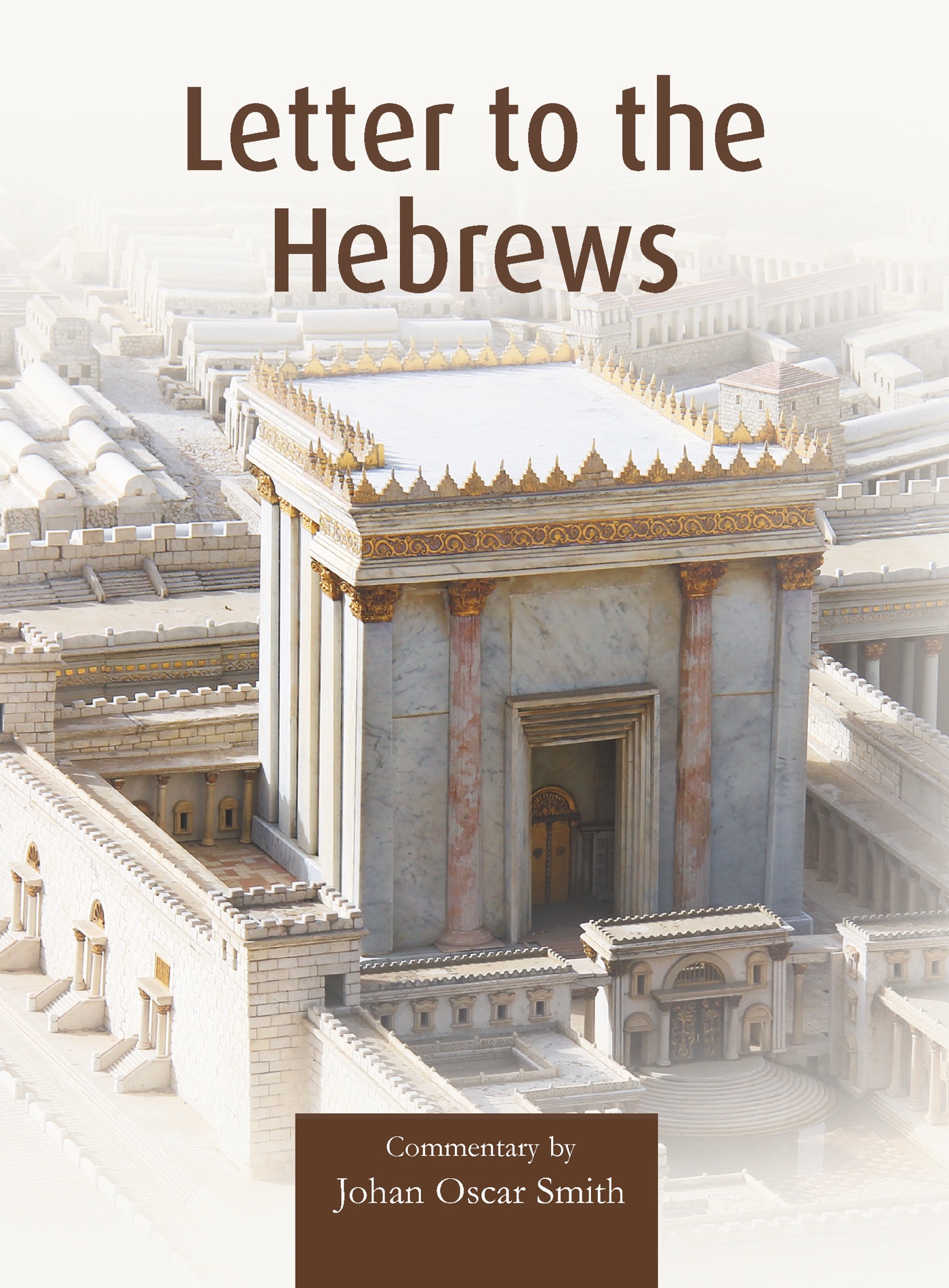
Chapter III
Verses 1-2. “Therefore, holy brethren, partakers of the heavenly calling, consider the Apostle and High Priest of our confession, Christ Jesus, who was faithful to Him who appointed Him, as Moses also was faithful in all His house.”
Consider Jesus, the Apostle. The work of an apostle is to bring light to those who sit in darkness. The Messiah had to suffer, and as the first to rise from the dead, He was to proclaim light to the Jewish people and to the Gentiles. Acts 26:23. After Jesus was tempted by Satan, and after He heard that John was thrown into prison, He went to live in Capernaum, which is by the sea in the regions of Zebulun and Naphtali.
From this time Jesus began His work as an apostle. He had been tempted by Satan but remained faithful. John had been thrown into prison so there was no support available from him. So Jesus stood there with His heavenly calling and with power and light in His inner man, against an entire world full of evil and darkness—without any support whatsoever in this world.
Consider Jesus in this situation—in truth an apostle’s position. Isaiah prophesied: “The people who sat in darkness have seen a great light, and upon those who sat in the region and shadow of death light has dawned.” Matt. 4:13-16.
Consider Jesus as High Priest. God declared Him to be High Priest according to the order of Melchizedek. Jesus’ work as High Priest cannot begin until a person has died to the transgressions of the first covenant. Heb. 9:15. He is the Mediator for the new covenant. This covenant is written in heart and mind. The reason you hardly ever hear of Jesus being spoken about from the pulpit as High Priest is because people do not know Him as High Priest. They know Him only as an offering for sins. Jesus’ work as High Priest enables us to be an offering for sin in Christ’s earthly body. Col. 1:22. Just knowledge of “sin and grace” is not enough in the body of Christ. It must go deeper so that it includes the knowledge of the death of Christ in us. Then the ministry of a mediator comes into its own. “For we who live are always delivered to death for Jesus’ sake, that the life of Jesus also may be manifested in our mortal flesh.” 2 Cor. 4:11.
This is written to people who have received a heavenly calling. Without having this calling it is impossible to confess and understand Jesus as Apostle and High Priest.
Jesus was faithful to Him who appointed Him. Through faithfulness we too get light over Jesus as High Priest. He was made High Priest in the days of His flesh because He was faithful to His heavenly Father in absolutely everything. The High Priest uses this faithfulness to teach us who are following the heavenly calling. We are instructed about right and wrong, truth and falsehood, even in the smallest details. We face decisions every moment. Here we must demonstrate divine faithfulness, if we are to be among the flock that follows the Lamb wherever He goes. Rev. 14:4. That we are following the Lamb means we are constantly being slaughtered like the Lamb. Our self-will must always be denied. God is always right, and we are always wrong. We need to acknowledge this continually. This is what it means to consider Jesus as High Priest, and how He became our High Priest.
Verses 3-6. “For this One has been counted worthy of more glory than Moses, inasmuch as He who built the house has more honor than the house.”
Moses was faithful in all God’s house. The house became visible through the law. God became known by the name “Lord.” The body received a form. Every sin that a person commits is outside the body. The law came because of transgressions, and all the offerings under the law were for the cleansing of the flesh. In this way the body received a form. God, who formerly was known as the great and almighty God, was now known by the name “Lord.” The Rock that followed them was Christ. It was a great honor for Moses that he was found faithful in all his service in the house. But Christ made the house, and he who makes the house has greater honor than the house itself. This is the difference between Moses’ honor and Christ’s honor.
“For every house is built by someone, but He who built all things is God.”
Moses unveiled the house that God had made before Moses was born. This house had become invisible because of transgressions and sin. But through the law and the sacrifices, the house, which is the body, became visible. Moses’ glory was that he was faithful in this ministry.
“But Christ as Son over His own house, whose house we are if we hold fast the confidence and the rejoicing of the hope firm to the end.”
All things are created through Christ and for Christ. The house was created long before Moses. But then the fall of man came and the house became invisible. By the ministry of Moses, the house became visible once again. However, Moses’ ministry, with its various sacrifices, was only able to cleanse the outside of the house, not the inside. But when Christ came (the One who made the house), He went into the house and sin was condemned in the flesh. Rom. 8:3. He cleansed the inside of the house and did what was impossible for the law to do. He came into the house by partaking of flesh and blood just like the children. And once He had entered, He was able to bind the strong man (Satan) and throw him out together with all his schemes. Satan’s will was crushed because while Jesus was in flesh and blood, He only did the will of His Father and not the will that is embedded in flesh and blood. By faith this is quite easy to understand. We are now His house. He dwells by faith in our hearts where we have sanctified Him as Lord. Satan and the flesh are no longer lords. On the contrary, we have crucified the flesh with its passions and desires, and this is how Satan is being crushed under our feet and his will is being crushed. Our Head is Christ, and He works in us to will and to do—directly against the will of the flesh and Satan. In this way, we are Christ’s house, and we have a greater ministry than Moses who only preached an outward purity. We can, in the power of Christ by the Holy Spirit, proclaim an inward and an outward purity. We can sing the song of Moses and of the Lamb. Moses had the testimony of the water, but if we are faithful to Him who speaks from heaven, we have the testimony of the Spirit, the water, and the blood.
Verses 7-11. “Therefore, as the Holy Spirit says: ‘Today, if you will hear His voice, do not harden your hearts as in the rebellion, in the day of trial in the wilderness . . . .”
God’s voice leads us into a land that is flowing with milk and honey. Today if we hear His voice, we can go in by faith. We are not entering an earthly Canaan but a heavenly one. The spies came back and were able to tell of the Amalekites dwelling in the south, the Hittites, the Jebusites, and the Amorites dwelling in the mountains and the Canaanites dwelling by the sea and along the banks of the Jordan.
Against all these enemy nations the Lord had said: “Therefore understand today that the Lord your God is He who goes over before you as a consuming fire. He will destroy them and bring them down before you; so you shall drive them out and destroy them quickly, as the Lord has said to you.” Deut. 9:1-4; Lev. 18:25.
But the people complained and wanted to stone Joshua and Caleb, because the other spies gave a bad report about the land to the children of Israel, saying: “We are not able to go up against the people, for they are stronger than we . . . all the people whom we saw in it are men of great stature. There we saw the giants (the descendants of Anak came from the giants); and we were like grasshoppers in our own sight, and so we were in their sight.” Num. 13:31-34.
Every one of these enemies was cursed, so they could easily have been defeated, but Israel was full of unbelief and did not believe the Lord, even though they had seen His mighty works during their entire journey from Egypt.
Now it is our turn. “Today, if you will hear His voice!” Our land is also full of enemies: “Adultery, fornication, uncleanness, lewdness, idolatry, sorcery, hatred, contentions, jealousies, outbursts of wrath, selfish ambitions, dissensions, heresies, envy, murders, drunkenness, revelries, and the like . . . .” Gal. 5:19-21.
All these enemies are cursed, and the Lord says: “Go up against them and destroy each one of them before the face of the Lord.” But the people of our day also weep and say, “We cannot; our enemies are too strong.” Then, spiritually speaking, they stone all those who by faith want to enter in. Nonetheless, God’s oath remains unchanged: “Truly, they shall not enter My rest!”
Verses 12-13. “Beware, brethren, lest there be in any of you an evil heart of unbelief in departing from the living God; but exhort one another daily, while it is called ‘Today,’ lest any of you be hardened through the deceitfulness of sin.”
This is exactly the right expression: “An evil heart of unbelief.” When dissensions, envy and idolatry have taken root in a person’s heart and he is not willing to give them up, he has an evil and unbelieving heart.
God’s Spirit leads us right against these enemies. When, in addition, a person weeps because he doesn’t want to lose these abominations, then this word becomes true: “The sorrow of the world produces death.” Blessed is everyone who hears God’s voice and does not harden his heart. He enters into rest by faith.
Verse 14. “For we have become partakers of Christ if we hold the beginning of our confidence steadfast to the end . . . .”
Christ came in the flesh and took up the battle against the self-will that dwelt in the flesh. He overcame it in the power of an eternal Spirit—that Spirit which He had received from His heavenly Father from birth. Now we have received the same Spirit as Christ, and we overcome just as He overcame. In this way we share both in the sufferings and in the glory together with Him. But the condition is that we hold fast to the full assurance of faith until the end.
Verses 17-19. “Now with whom was He angry forty years? Was it not with those who sinned, whose corpses fell in the wilderness? And to whom did He swear that they would not enter His rest, but to those who did not obey? So we see that they could not enter in because of unbelief.”
These things are written as examples for us. Through faith we enter into rest, but God has sworn that no one who is unbelieving shall enter into His rest.
Israel was saved from Egypt and from Pharaoh. These correspond to the power of Satan and the world. Nevertheless, God was not pleased with most of them because of their unbelief. Most Christians today are also wandering around in the wilderness without entering into the rest of faith. God is angry because of such unbelief. When the way has been opened through the veil (Jesus’ flesh), it is tragic that so few walk on this blessed way. This makes God angry, which is quite understandable. He commands us to go into the land and conquer wrath, anger, malice, backbiting, covetousness, jealousy, adultery, division, etc., and yet people are overcome by most of these works of the flesh. That does not give them rest; on the contrary, it gives them a bad conscience and all kinds of unrest. Kill these enemies, and then you will have peace. Dash their little ones against the “Rock,” and then you will get rest.
'%3e%3cpath%20d='M6.54486%2022.9268C6.54486%2022.9268%206.53328%2022.9268%206.52749%2022.921L6.3789%2022.8188C6.36732%2022.811%206.36346%2022.7975%206.36732%2022.784C6.65292%2021.8925%206.79958%2021.3985%206.80151%2021.3946C7.50006%2019.1542%207.57532%2016.4585%207.01956%2013.6044C6.67222%2011.8233%206.53907%209.51924%206.53714%209.49608C6.32294%205.48423%207.3534%203.6568%207.98827%202.92351L8.02687%202.91772L8.17931%203.00456C8.19089%203.01228%208.19668%203.02579%208.19282%203.0393C7.99406%203.68189%207.87056%204.34956%207.87056%204.35535C7.42866%207.10132%207.83583%2012.0433%208.24878%2014.5172C8.67332%2017.0625%208.38579%2019.2411%208.38386%2019.2623C8.03073%2021.4274%207.09289%2022.483%206.56608%2022.9191L6.54678%2022.9268H6.54486Z'%20fill='black'/%3e%3cpath%20d='M17.0135%2026.4292C17.0135%2026.4292%2017.0019%2026.4292%2016.9961%2026.4234L16.8475%2026.3212C16.836%2026.3134%2016.8321%2026.2999%2016.836%2026.2864C17.0772%2025.5377%2017.2219%2025.0591%2017.2605%2024.9318C17.9648%2022.6682%2018.0439%2019.9609%2017.4882%2017.1088C17.1408%2015.3257%2017.0077%2013.0236%2017.0058%2013.0004C16.7896%208.9519%2017.8259%207.13604%2018.4627%206.41241L18.5013%206.40662L18.6518%206.49538C18.6634%206.5031%2018.6692%206.51661%2018.6653%206.53205C18.4646%207.17464%2018.3392%207.85582%2018.3392%207.86161C18.0845%209.4459%2018.1308%2011.6245%2018.2138%2013.1741L18.2215%2013.3227L18.3527%2013.2532C19.6437%2012.5797%2020.7069%2011.9005%2021.3708%2011.4509L21.4113%2011.4547L21.5271%2011.5782C21.5367%2011.5898%2021.5386%2011.6072%2021.5271%2011.6187C20.4464%2012.983%2018.4318%2014.4554%2018.3469%2014.5172L18.3141%2014.5422L18.3083%2014.5828C18.4125%2015.8641%2018.5572%2017.0779%2018.7136%2018.0234C19.1381%2020.5687%2018.8506%2022.7493%2018.8486%2022.7705C18.4955%2024.9356%2017.5577%2025.9912%2017.0309%2026.4273L17.0116%2026.435L17.0135%2026.4292Z'%20fill='black'/%3e%3cpath%20d='M10.9639%2028C10.9639%2028%2010.9484%2027.9981%2010.9446%2027.9923L10.8076%2027.8707C10.7979%2027.8611%2010.794%2027.8476%2010.7998%2027.836C11.2919%2026.5778%2011.5756%2025.804%2011.6277%2025.6612C12.7874%2022.5891%2012.9129%2018.9014%2011.9885%2014.9957C11.4116%2012.5566%2011.1877%209.39959%2011.1858%209.37064C10.7844%203.16664%2013.0344%200.750655%2014.0205%200H14.0591L14.198%200.111923C14.2077%200.121571%2014.2135%200.135079%2014.2077%200.148587C13.8005%201.09221%2013.5227%202.31564%2013.5207%202.32722C12.7874%206.08821%2013.4609%2012.8538%2014.1479%2016.2442C14.8561%2019.7389%2014.3756%2022.7203%2014.3717%2022.7512C13.704%2026.1185%2011.7782%2027.5407%2010.9812%2027.9961L10.9658%2028H10.9639Z'%20fill='black'/%3e%3c/g%3e%3cdefs%3e%3cclipPath%20id='clip0_3867_12532'%3e%3crect%20width='28'%20height='28'%20fill='white'/%3e%3c/clipPath%3e%3c/defs%3e%3c/svg%3e)